If your skin feels rough, uneven, or less firm than it once did, you may have come across microneedling while researching professional skin-rejuvenation options. The treatment is widely used for concerns such as uneven texture, visible pores, fine lines, acne scars, and other changes in the skin’s surface.
But what is microneedling, exactly?
Microneedling is a minimally invasive skin treatment that uses very small, sterile needles to create controlled micro-injuries in the skin. These tiny punctures stimulate the skin’s natural repair response, encouraging the production of collagen and elastin. Because collagen plays an important role in skin structure and firmness, microneedling is also commonly called collagen induction therapy.
Rather than covering the skin or temporarily changing its appearance, microneedling works by prompting a controlled healing response. Over time, that process can help improve the look and feel of the skin.
The American Academy of Dermatology explains that dermatologists use microneedling to address concerns including acne scars, uneven skin tone and texture, large pores, fine lines, wrinkles, dark spots, and certain types of scars. The organization also notes that results develop gradually as new collagen forms.
For people considering microneedling for skin texture, understanding how the treatment works, what it can realistically address, and what recovery involves can make it easier to decide whether it belongs in a broader skincare plan.
How Does Microneedling Work?
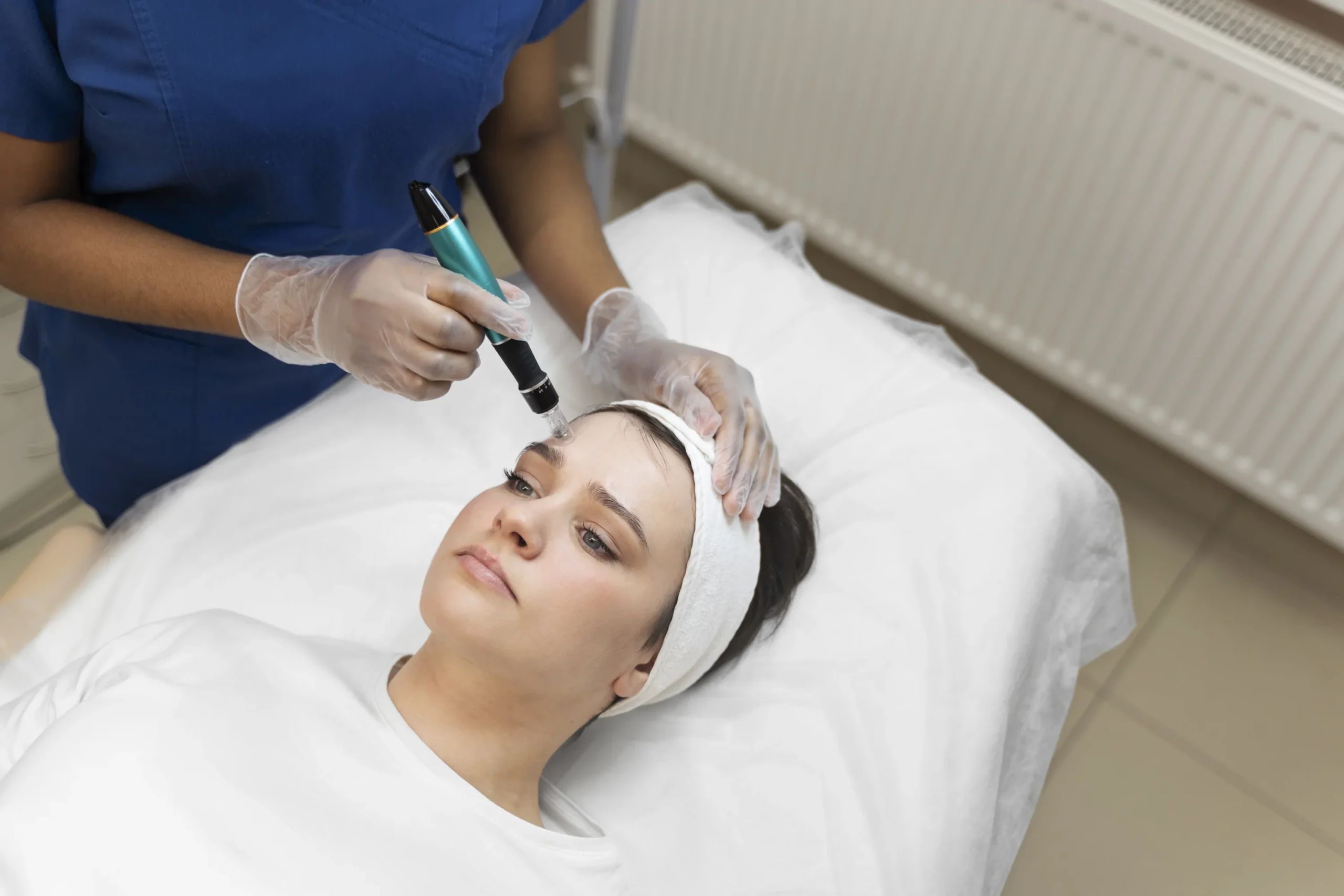
Microneedling uses a professional device equipped with very fine needles. During treatment, those needles create tiny, controlled channels in the skin.
The purpose is not to damage the skin indiscriminately. Instead, the treatment creates a measured physical stimulus that activates the body’s wound-healing process.
That repair response includes increased activity related to collagen and elastin production.
Collagen is a structural protein that helps support skin firmness, strength, and resilience. Elastin contributes to the skin’s ability to stretch and return to its original shape.
As the skin repairs itself after treatment, the formation and remodeling of these structural proteins can gradually improve the appearance of uneven texture and other surface concerns.
Cleveland Clinic describes microneedling as a minimally invasive procedure that stimulates the skin’s healing process by creating tiny holes in the upper layers of the skin. You can read its overview of how microneedling works for additional medical background.
What Does Microneedling Do for Skin Texture?
Texture is one of the most common reasons people consider microneedling.
Skin texture can change for many reasons, including:
- Acne scarring
- Enlarged or more visible pores
- Fine lines
- Sun exposure
- Natural aging
- Previous inflammation
- Irregular skin renewal
- Certain types of scarring
Microneedling does not physically “polish” the skin in the same way as a surface exfoliation treatment. Instead, it works beneath the visible surface by encouraging a repair response.
This is why microneedling for uneven skin texture can be useful when the concern is linked to changes in collagen structure rather than simply dry or flaky skin.
At SYNC Life, microneedling is part of a broader selection of regenerative aesthetic services intended to support skin rejuvenation based on individual concerns and goals.
What Are the Main Microneedling Benefits?
The potential benefits of microneedling depend on your skin, the condition being treated, the depth and technique used, and the number of treatment sessions recommended.
Some of the most common reasons people choose professional microneedling include the following.
Smoother-Looking Skin Texture
Because microneedling stimulates a repair response, it can help improve the appearance of skin that looks uneven or feels rough.
Over time, collagen remodeling may make the skin surface appear more refined.
For people who feel that topical skincare alone has not sufficiently addressed texture concerns, a professional treatment may offer a different approach.
Reduced Appearance of Acne Scars
Microneedling is commonly used to help reduce the appearance of certain acne scars.
The American Academy of Dermatology explains that microneedling can stimulate new collagen and elastin in skin affected by acne scarring. In some cases, dermatologists combine microneedling with other treatments depending on the type and severity of the scars.
Not every acne scar responds the same way. Deep or complex scarring may require a combination approach, which is why professional evaluation matters.
Softer Appearance of Fine Lines
Fine lines can become more noticeable as collagen production changes with age.
By stimulating the skin’s natural healing response, microneedling for fine lines may help improve the appearance of mild textural aging over time.
It is important to distinguish between fine lines caused partly by collagen loss and dynamic wrinkles caused by repeated muscle movement. Those concerns may require different aesthetic treatments.
More Refined-Looking Pores
Microneedling may help reduce the appearance of enlarged pores by improving the structure and texture of the surrounding skin.
Pores do not literally open and close, but changes in skin firmness, oil production, scarring, and surrounding collagen can make them appear more or less noticeable.
If visible pores are one of your main concerns, a consultation can help determine whether microneedling, laser treatment, chemical peeling, or another approach makes the most sense.
More Even-Looking Skin Tone
The American Academy of Dermatology lists uneven skin tone and certain pigmentation concerns among the issues microneedling may be used to address.
However, pigmentation can have many causes. Sun damage, post-inflammatory hyperpigmentation, melasma, medication, hormones, and other factors can affect the way discoloration should be treated.
A professional skin assessment is especially important when pigmentation is the primary concern.
Firmer-Looking Skin
Because microneedling stimulates collagen and elastin production, it may help skin appear firmer over time.
This effect is gradual rather than immediate.
People sometimes expect aesthetic treatments to produce a finished result as soon as the appointment ends. With microneedling, the biological process that creates improvement continues after the session as the skin heals and remodels.
What Is the Difference Between Microneedling and a Facial?
Traditional facials generally focus on cleansing, exfoliation, hydration, extraction, or topical skincare.
Microneedling is different because it is a procedure that intentionally creates microscopic channels in the skin to stimulate a repair response.
A facial may leave the skin feeling refreshed shortly after treatment, while microneedling is typically selected when the goal involves concerns such as:
- Textural irregularity
- Acne scarring
- Fine lines
- Enlarged pores
- Uneven tone
- Loss of firmness
The two types of services can have different purposes, so the better option depends on what you are trying to improve.
Microneedling vs. Microdermabrasion: What Is the Difference?
These treatments are sometimes confused because both can be associated with smoother-looking skin.
Microdermabrasion works primarily through mechanical exfoliation of the outermost skin surface.
Microneedling uses fine needles to create controlled micro-injuries that stimulate the skin’s healing process.
Cleveland Clinic notes that both treatments can be used to improve skin appearance and texture, but they work differently. Microdermabrasion does not use needles, while microneedling is specifically designed to stimulate deeper repair activity.
For mild surface dullness, exfoliation may be sufficient. For concerns involving texture, scars, or collagen support, microneedling may be considered instead.
What Is Microneedling With PRP?
Microneedling can also be combined with platelet-rich plasma, commonly called PRP.
PRP is prepared from a small sample of the patient’s own blood. The blood is processed so the platelet-rich portion can be used during treatment.
The American Academy of Dermatology notes that microneedling may be combined with PRP to further support collagen-producing activity, and the combination is sometimes used when treating acne scars.
SYNC Life also offers a Vampire Facial using microneedling and PRP as part of its aesthetic services.
Standard microneedling and microneedling with PRP are not automatically interchangeable. The appropriate choice depends on the individual’s goals, skin condition, medical history, and provider recommendation.
What Happens During a Professional Microneedling Treatment?
The exact process can vary by provider and treatment area, but a professional microneedling appointment generally follows a structured sequence.
Consultation and Skin Evaluation
Before treatment, the provider should review your goals, skin concerns, medical history, current skincare products, medications, and any factors that could affect treatment safety.
This is also the time to discuss:
- Previous cosmetic procedures
- History of scarring
- Active acne or infections
- Recent sun exposure
- Current medications
- Skin sensitivity
- Expected results
- Recovery and aftercare
The American Academy of Dermatology emphasizes that pre-treatment evaluation is important because microneedling is not appropriate for everyone at every time.
Skin Preparation
The treatment area is cleaned before microneedling begins.
Depending on the procedure and provider protocol, a topical numbing product may be used to improve comfort.
Microneedling Treatment
The professional device is passed over the targeted areas using settings appropriate for the treatment plan.
SYNC Life states that its microneedling sessions generally take about 30 minutes, though appointment length can vary depending on the area being treated and other factors.
The depth and technique should be selected based on the patient’s skin and treatment goal rather than using the same settings for everyone.
Post-Treatment Care
After treatment, the skin may appear red or feel sensitive.
Your provider should give you specific instructions on cleansing, moisturizing, sun protection, activity, and which skincare ingredients to temporarily avoid.
Following those directions is important because the skin barrier is recovering after the procedure.
What Does Skin Look Like After Microneedling?
Temporary redness is common after microneedling.
Some people may also experience:
- Mild swelling
- Warmth
- Tightness
- Dryness
- Flaking
- Sensitivity
The intensity and duration of these effects vary depending on treatment depth, skin type, treatment area, and individual response.
Microneedling is often described as having relatively limited downtime compared with more aggressive resurfacing procedures, but “minimal downtime” does not mean zero recovery.
It is reasonable to plan for temporary visible redness or sensitivity after treatment.
How Long Does Microneedling Take to Work?
Microneedling results are not usually immediate because the treatment depends on the body’s own repair process.
The American Academy of Dermatology states that some improvement may become visible within a few weeks, while full results can take several months as collagen production continues.
This makes microneedling different from treatments that produce an immediate cosmetic change.
Skin may initially look fresher after recovery, but improvements related to collagen remodeling tend to develop gradually.
How Many Microneedling Sessions Do You Need?
There is no universal number of treatments.
Some people may be satisfied with a limited number of sessions for mild concerns, while others may need a series of treatments for acne scars, deeper textural issues, or more advanced signs of aging.
The American Academy of Dermatology notes that multiple treatments are often needed, particularly when microneedling is being used for acne scarring.
Your treatment plan may depend on:
- Your primary skin concern
- Severity of texture or scarring
- Treatment depth
- Skin response
- Whether microneedling is combined with another service
- Your overall aesthetic goals
This is one reason professional consultation is more useful than choosing a fixed number of sessions based on a general recommendation online.
Who May Be a Good Candidate for Microneedling?
Microneedling may be considered by adults who want to improve concerns such as:
- Uneven skin texture
- Acne scars
- Fine lines
- Enlarged pores
- Certain pigmentation concerns
- Mild loss of firmness
The American Academy of Dermatology notes that professional microneedling can be used across different skin tones.
However, suitability depends on more than skin tone alone.
Medical history, active skin conditions, medications, healing ability, and the specific concern being treated should all be reviewed before treatment.
Who Should Avoid or Postpone Microneedling?
Microneedling is not appropriate for everyone.
According to the American Academy of Dermatology, treatment may need to be avoided or postponed in people with certain conditions, including active skin infections, some types of active acne, poor healing, a history of keloid scarring, weakened immunity, or certain cancer treatments.
Recent sunburn or significant sun exposure can also affect treatment timing.
You can review the Academy’s detailed guidance on microneedling safety, candidacy, and expected results.
If you are unsure whether a medical condition or medication affects your eligibility, discuss it with a qualified healthcare professional before treatment.
Professional Microneedling vs. At-Home Microneedling
At-home rollers and needling devices are widely available, but they should not be considered equivalent to professional microneedling.
Professional treatment involves controlled technique, sterile equipment, appropriate needle depth, skin evaluation, and aftercare guidance.
The American Academy of Dermatology warns that at-home microneedling can cause irritation, infection, scarring, changes in skin color or texture, and even the spread of certain skin infections when devices puncture the skin or are used improperly.
If your goal is meaningful improvement in acne scars, texture, pigmentation, or other skin concerns, professional evaluation is the safer route.
How Should You Prepare for Microneedling?
Preparation recommendations vary by provider, so always follow the instructions given for your specific treatment.
Your provider may ask about or provide guidance concerning:
- Retinoids and exfoliating products
- Recent sun exposure
- Active breakouts
- Skin infections
- Medications
- Previous cosmetic procedures
- Skincare products
- Sun protection
Do not stop prescription medication solely because you are planning an aesthetic treatment unless the prescribing clinician or appropriate healthcare professional tells you to do so.
Good preparation is about reducing avoidable irritation and making sure the procedure is appropriate for your skin at that time.
What Should You Avoid After Microneedling?
Aftercare is just as important as the procedure itself.
The skin may be temporarily more sensitive, so the goal is generally to protect the skin barrier while it recovers.
Your provider may advise you to temporarily avoid certain activities or products, such as:
- Aggressive exfoliation
- Retinoids
- Strong acids
- Harsh scrubs
- Excessive heat
- Intense exercise immediately after treatment
- Direct sun exposure
- Picking or peeling the skin
Daily sun protection is especially important.
Follow the instructions provided by your treatment professional because recommendations can vary based on treatment intensity and your skin.
How Does Microneedling Compare With Other Aesthetic Treatments?
Microneedling is only one option for improving skin texture.
SYNC Life’s aesthetic services also include laser treatments, VI Peel, Vampire Facial with PRP, cosmetic injections, natural dermal filler options, and red light therapy.
Different treatments address different mechanisms and concerns.
For example:
- Microneedling focuses on controlled collagen induction and skin remodeling.
- Laser treatments use specific wavelengths of light to address concerns such as pigmentation, redness, texture, and other targeted skin issues.
- Chemical peels exfoliate controlled layers of skin and can improve certain texture, pigmentation, and blemish concerns.
- Neurotoxin injections primarily address dynamic expression lines caused by muscle movement.
- PRP-enhanced treatments use platelet-rich plasma as part of a regenerative approach.
Choosing the most appropriate treatment starts with identifying what is actually causing the concern you see in the mirror.
Why Skin Texture Should Be Evaluated Before Choosing a Treatment
“Uneven texture” is a broad description, not a diagnosis.
One person may be dealing primarily with acne scarring. Another may have enlarged pores and mild fine lines. Someone else may have roughness caused by dehydration or a disrupted skin barrier.
Those issues do not necessarily need the same treatment.
A professional assessment can help distinguish among concerns related to:
- Collagen loss
- Scarring
- Pigmentation
- Active acne
- Dryness
- Redness
- Sun damage
- Skin sensitivity
- Aging
That distinction matters because the best skin rejuvenation treatment is the one that matches the cause of the concern, not simply the treatment that happens to be popular.
Microneedling in Baton Rouge at SYNC Life
SYNC Life offers professional microneedling at its Baton Rouge, Louisiana location as part of its regenerative aesthetic services.
According to SYNC Life, its approach to microneedling is designed to stimulate the skin’s natural healing process and support improvements in texture, tone, visible pores, and firmness.
The practice also offers microneedling alongside other aesthetic options, making it possible to evaluate whether microneedling alone or a different treatment strategy better aligns with the patient’s goals.
Patients who want to learn more can review SYNC Life’s dedicated microneedling treatment information or explore its broader aesthetic services.
Frequently Asked Questions About Microneedling
What is microneedling in simple terms?
Microneedling is a minimally invasive skin procedure that uses very small sterile needles to create controlled micro-injuries in the skin. Those tiny channels stimulate the body’s natural healing response and encourage collagen and elastin production. It is commonly used to improve concerns such as uneven skin texture, acne scars, fine lines, and visible pores.
Does microneedling really improve skin texture?
Microneedling can help improve certain types of uneven skin texture by stimulating collagen remodeling. The American Academy of Dermatology lists uneven texture, acne scars, large pores, fine lines, and wrinkles among the concerns professional microneedling may address. Results vary, and improvements typically develop gradually rather than appearing immediately after treatment.
Is microneedling good for acne scars?
Professional microneedling is commonly used for certain acne scars because the controlled needling process stimulates new collagen and elastin. The effectiveness depends on the type and depth of scarring. More complex scars may require multiple sessions or a combination of treatments, so an individualized skin assessment is important.
How long does it take to see microneedling results?
Some people may begin noticing changes within a few weeks, but collagen remodeling continues for months. The American Academy of Dermatology notes that full results often take several months to develop. The timeline varies based on the treatment goal, skin condition, number of sessions, and individual healing response.
How much downtime is there after microneedling?
Downtime varies, but temporary redness, sensitivity, mild swelling, dryness, or flaking can occur after microneedling. Many people consider the recovery relatively manageable compared with more aggressive resurfacing procedures. Your provider should give you specific post-treatment instructions based on the treatment depth and your skin.
How many microneedling treatments will I need?
There is no single treatment number that applies to everyone. The number of sessions depends on whether you are treating mild texture concerns, fine lines, acne scars, or another issue. Some people require a series of treatments to reach their goals. A professional consultation is the best way to establish an appropriate treatment plan.
Is professional microneedling better than an at-home roller?
Professional microneedling offers controlled needle depth, sterile technique, individualized treatment settings, and professional evaluation. At-home devices are not equivalent. The American Academy of Dermatology warns that improper at-home needling can cause irritation, infection, scarring, pigment changes, or the spread of certain skin infections.
Where can I get microneedling in Baton Rouge?
SYNC Life offers professional microneedling at 17650 Highland Road, Suite E, Baton Rouge, LA 70810. The treatment is part of SYNC Life’s broader aesthetic-services offering, which also includes laser treatments, VI Peel, PRP-based treatments, cosmetic injections, and other skin-rejuvenation options.
Learn Whether Microneedling Fits Your Skin Goals
If you have been researching what is microneedling because you want smoother-looking texture, less noticeable acne scarring, refined pores, or a more even complexion, the next step is determining whether the treatment is appropriate for your specific skin.
Microneedling works by stimulating a controlled healing response and encouraging collagen production, which means results develop progressively rather than instantly. The right treatment plan depends on your skin concerns, medical history, current skin condition, and aesthetic goals.
SYNC Life offers professional microneedling and aesthetic services in Baton Rouge with treatment options designed around individual needs.
To learn more or schedule an appointment, contact SYNC Life at (225) 425-7962 or visit 17650 Highland Road, Suite E, Baton Rouge, LA 70810.