The answer to how to prepare for a biomarker blood test depends on the tests ordered and the instructions from your clinician and laboratory. Some panels require fasting or a particular collection time; others do not. Do not apply a universal fasting period or stop a prescribed medicine because of a general article.
Before the appointment, confirm what is being tested, how to prepare, where collection will occur, and how the results will be reviewed. Keep a current list of medicines and supplements available for the care team.
For patients considering biomarker testing with SYNC Life in Baton Rouge, preparation should be a conversation about the actual panel and health context. A clear set of instructions is more useful than arriving after following advice meant for someone else’s laboratory tests.
Know Which Tests Are Actually Ordered
“Biomarker panel” is a broad description. It does not identify one fixed set of tests or one preparation protocol.
Ask for the names of the ordered tests and the reason they are being considered. Understand whether the goal is screening, monitoring, investigation of a concern, or another clinical purpose.
A larger panel is not automatically more appropriate for every person. The clinician should explain how the selected information may affect your care.
Keep a copy of the order or the relevant appointment instructions. If the collection team and clinic appear to have different information, resolve that discrepancy before the draw rather than assuming the familiar phrase “wellness bloodwork” means everyone is discussing the same panel.
Get Preparation Instructions From the Responsible Team
Ask which instructions apply to the specific tests and collection laboratory. If more than one source provides directions, clarify any differences with the care team.
MedlinePlus guidance on preparing for lab tests explains that preparation varies and that following the correct instructions matters. That is the principle to use when a general checklist conflicts with your actual order.
Request the directions in writing when possible. A saved message or document is easier to follow than a remembered phone conversation.
Record whom to contact if something is unclear. The question may belong with the ordering clinician, the laboratory, or both. Knowing that route before the appointment reduces last-minute confusion.
Confirm Whether Fasting Is Required
Do not assume all blood tests require fasting. Ask whether it applies to your panel, what the exact instructions are, and how the appointment time should fit them.
If fasting is required, clarify what is permitted and how any relevant health condition or medicine affects the plan. Do not extend the period because you believe a longer fast will create a better result.
Quest’s preparation information directs patients to confirm test-specific fasting requirements. Its instructions are a useful example of laboratory guidance, not evidence that SYNC Life uses that laboratory or that every panel follows the same protocol.
If you cannot safely follow the instructions or are uncertain about them, contact the care team before proceeding. The plan should fit your clinical circumstances.
Discuss Medicines Without Changing Them Yourself
Prepare a current medicine list, including prescribed treatments and relevant nonprescription products. Include the names and the information your clinician requests about use.
Ask whether any timing question needs review before the blood draw. Do not independently omit, delay, or stop a prescribed medicine to make the laboratory result appear more favorable.
If more than one clinician manages your treatment, explain that. The ordering team may need to coordinate a question with the prescribing professional.
Bring the agreed instructions to the appointment. A laboratory collector should not be expected to reconstruct a medication decision from an incomplete verbal account. Clear preparation protects the distinction between gathering test information and changing a treatment plan.
Include Supplements in the Conversation
Supplements belong on the preparation list. Record product names and ingredients rather than describing them only as a vitamin, beauty product, or wellness blend.
The FDA has highlighted that biotin can interfere with certain laboratory tests. That does not create one universal instruction for every person or test. It makes disclosure and test-specific advice important.
Photograph labels if that is the easiest way to provide accurate information. Include combination products so the clinician can see ingredients you might otherwise overlook.
Ask the care team whether any preparation change is needed and follow its instructions. Do not adopt a supplement-stop interval from another person’s panel or an unrelated laboratory example.
Ask About Timing and Recent Circumstances
Some tests or clinical questions involve timing considerations. Ask whether the appointment needs to occur at a particular time or in relation to a treatment or other relevant event.
Tell the clinician about recent illness, significant changes in routine, or other circumstances it asks you to report. Do not decide those details are irrelevant simply because the appointment is described as preventive.
The goal is to collect information the clinician can interpret in context, not to create a perfect-looking day that conceals your ordinary circumstances.
If a new issue arises before the appointment, call for guidance. The team can explain whether the collection should proceed, whether the information should be documented, or whether another arrangement is more appropriate.
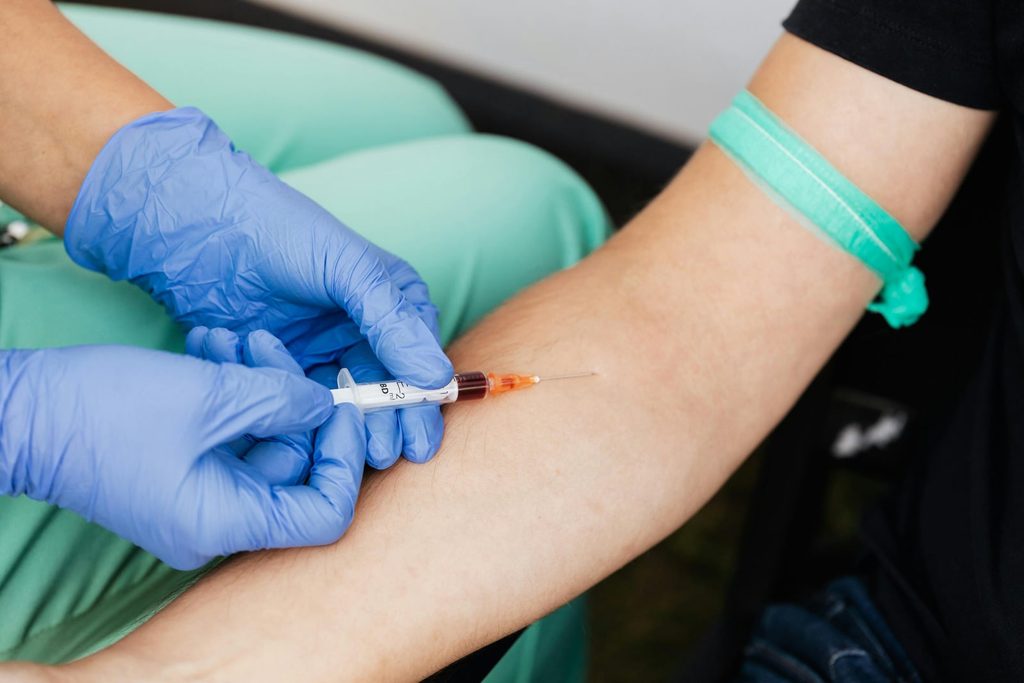
Confirm the Collection Location and Practical Details
Verify where the blood draw will take place, whether an appointment is required, and what identification, order information, or other documents are needed.
Do not assume the consultation location and collection location are the same. Confirm the current address directly when arranging the visit.
Ask about payment or coverage questions before the appointment so they do not distract from the preparation instructions. The clinic should explain which questions it can answer and which belong with another provider or payer.
If you have a history of difficulty with blood draws or another relevant concern, tell the team in advance. It can explain what accommodations or instructions may be appropriate for your appointment.
Review the SYNC Life FAQs for general service context, then confirm collection and preparation details directly for your ordered tests.
Follow Hydration and Activity Instructions as Given
Ask what the laboratory and clinician recommend about fluids, food, exercise, and other preparation relevant to the ordered tests. Avoid assuming every everyday activity has the same restriction for every panel.
Do not intentionally dehydrate or overhydrate yourself in an effort to influence the result. Follow the specific instructions rather than a general social-media routine.
Keep the preparation manageable. A short written checklist is often enough to separate what is required from what you merely read online.
If you have been given a restriction that seems difficult or inconsistent with your health needs, clarify it before the draw. The appropriate response is a clinical conversation, not choosing between conflicting instructions on your own.
Tell the Collector If Preparation Did Not Go as Planned
If you ate when fasting was required, changed a medicine without approval, or missed another instruction, tell the collection team before the sample is taken.
Do not hide the issue because you worry about inconvenience. Accurate context helps the responsible team decide what to do.
Labcorp’s test-preparation guidance specifically advises patients to disclose when preparation instructions were not followed. This is general laboratory guidance; it does not identify SYNC Life’s collection partner.
Ask whether the test should proceed or be rescheduled, and who needs to make that decision. A documented adjustment is more useful than a result interpreted without knowing how the sample was collected.
Plan the Results Conversation Before You Leave
Find out how results will be delivered, who reviews them, and how follow-up questions are handled. A portal notification is not necessarily the same as a completed clinical interpretation.
Ask what to do if expected communication does not arrive. Use the confirmed clinic route rather than sharing a report through a public social account.
During review, discuss what a result means in the context of your history, the panel’s purpose, and any preparation limitations. Do not assume every flagged value identifies a disease or that every unflagged value resolves a health concern.
The useful endpoint is an understandable plan, including whether any follow-up, repeat measurement, or other assessment is appropriate.
Make Repeat Testing Comparable Where Appropriate
If testing is being repeated, tell the clinician when and where the earlier sample was collected and provide the actual report if available.
Ask whether collection timing or preparation should be made consistent for the comparison. Do not independently reproduce a previous mistake simply to make the conditions match.
Keep records of relevant treatment or health changes between tests. A number considered without that context can be harder to interpret.
SYNC Life advertises biomarker testing within its Vitality Track approach. Discussing the panel and preparation directly with the team helps connect the testing to an actual clinical question rather than treating a broad list of markers as a goal by itself.
Prepare for the Test You Have Been Ordered
The practical approach to how to prepare for a biomarker blood test is to confirm the panel, follow the correct instructions, disclose relevant products and circumstances, and plan the review.
Keep the directions accessible and ask questions early. If preparation changes, report it accurately.
That routine gives the clinician better context for interpreting the result and gives you a clearer understanding of what the appointment is intended to accomplish. It also avoids the unnecessary uncertainty created by following a generic fasting or supplement routine without checking whether it belongs to your tests.
Frequently Asked Questions
Do all biomarker blood tests require fasting?
No. Preparation depends on the ordered tests and laboratory instructions. Confirm whether fasting applies, the exact directions, and how the appointment time should fit them. Do not assume a longer fast improves the result or apply instructions from another person’s panel to your own appointment.
Can I take prescribed medicine before the blood draw?
Do not change prescribed treatment on your own. Provide a current medicine list and ask the ordering clinician whether any timing question needs review. If another professional prescribed the medicine, explain that so the teams can coordinate appropriate instructions for your situation.
Why do supplements matter before testing?
Some ingredients can affect particular laboratory tests or their interpretation. Tell the care team exactly what you use, including combination products, and provide labels when helpful. Follow test-specific instructions rather than independently stopping products for an interval taken from an unrelated panel or online discussion.
What if I did not follow the preparation instructions?
Tell the collection team before the sample is taken. Explain what happened and ask whether the test should proceed or whether the ordering clinician needs to decide. Do not conceal the issue to avoid rescheduling, because preparation context can matter when the results are interpreted.
Does an abnormal result automatically identify a disease?
No single general answer applies to every test or value. Results need clinical interpretation alongside the test’s purpose, history, and relevant circumstances. Arrange a review with the responsible clinician rather than diagnosing yourself from a portal flag or assuming an unflagged panel answers every health question.
Confirm Your Testing Plan With SYNC Life
Contact SYNC Life to discuss biomarker testing, preparation instructions, and results review in Baton Rouge. Confirm the actual panel and collection arrangements so you can prepare for the appointment you are scheduled to attend.